
Our Research
Mechanisms of Ubiquitin-Mediated Transport
The ubiquitin system represents one of biology's most sophisticated regulatory networks, controlling virtually every cellular process through the formation of diverse chain architectures that are decoded by ubiquitin-binding domains with remarkable specificity. While the degradative functions of ubiquitination are well-established, we are only beginning to understand how this system orchestrates the complex trafficking events that maintain cellular organization and respond to environmental challenges. The Lange Lab's research program will address fundamental gaps in our understanding of how ubiquitin signals are interpreted to control intracellular transport.
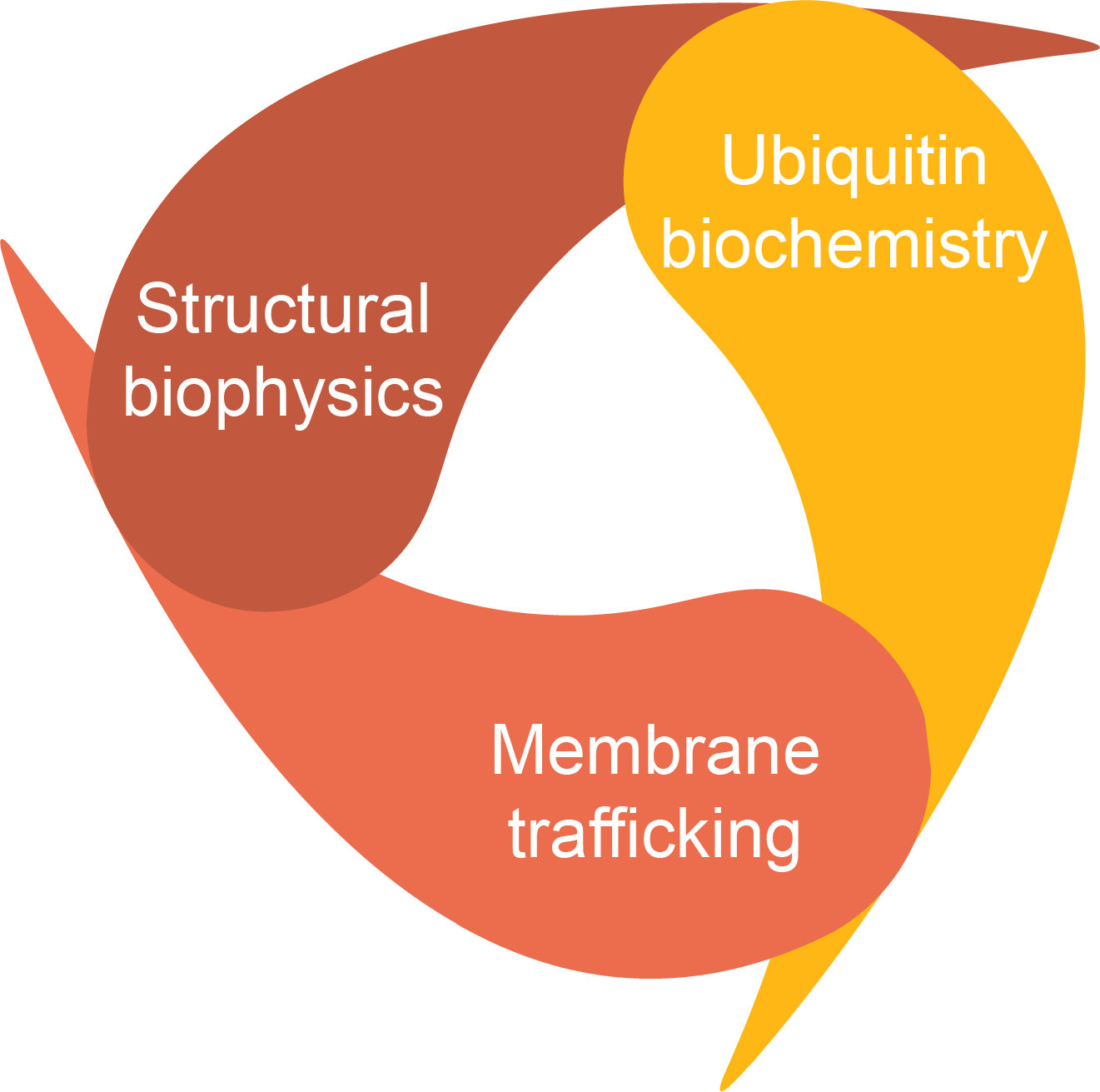
We employ a multi-disciplinary strategy combining structural biology, biochemistry, bioinformatics, optical microscopy, and proteomics to investigate ubiquitin-mediated transport mechanisms across all scales of a cell.
Allosteric Regulation of Ubiquitin Binders During Transport Events
A recently discovered mechanism establishes how the small GTPase ARL3 allosterically regulates ubiquitin binding by the ciliary adapter CFAP36, thereby controlling the export of damaged proteins from cilia. We will expand on this concept to explore the spatio-temporal control of ubiquitin-dependent transport events in the cell.